OEM vs ODM cosmetics is one of the first decisions every beauty brand faces — and mixing the two up costs real money in wrong quotes, mismatched MOQs, and R&D you never needed.
Key Takeaways
- OEM means you bring the formula and specification; ODM means the factory’s lab designs from proven bases and you customize and brand.
- Neither model is better in general. The right choice depends on your stage, your budget, and how much product ownership your brand strategy needs.
- Formula ownership and exclusivity are contract terms, not model labels. Agree in writing who owns the final formula before sampling begins.
- Indicative figures from our facility: stock skincare formulas from 3,000 pcs per product, sampling in 4–7 days, production in 4–5 weeks. Full custom development typically starts around 10,000 pcs, with 10–14 day sampling.
- Most real projects end up hybrid: start from a proven base, then adjust actives, texture and packaging until the product is effectively yours.
What Is Cosmetics OEM Manufacturing?
OEM (Original Equipment Manufacturer) means you bring the design; the factory brings production capacity.
In a true OEM project, the brand typically provides:
- A confirmed formula — your own recipe, or one you have licensed
- Packaging specifications (component, material, artwork, print method)
- Branding and label files
- Regulatory direction for your target market
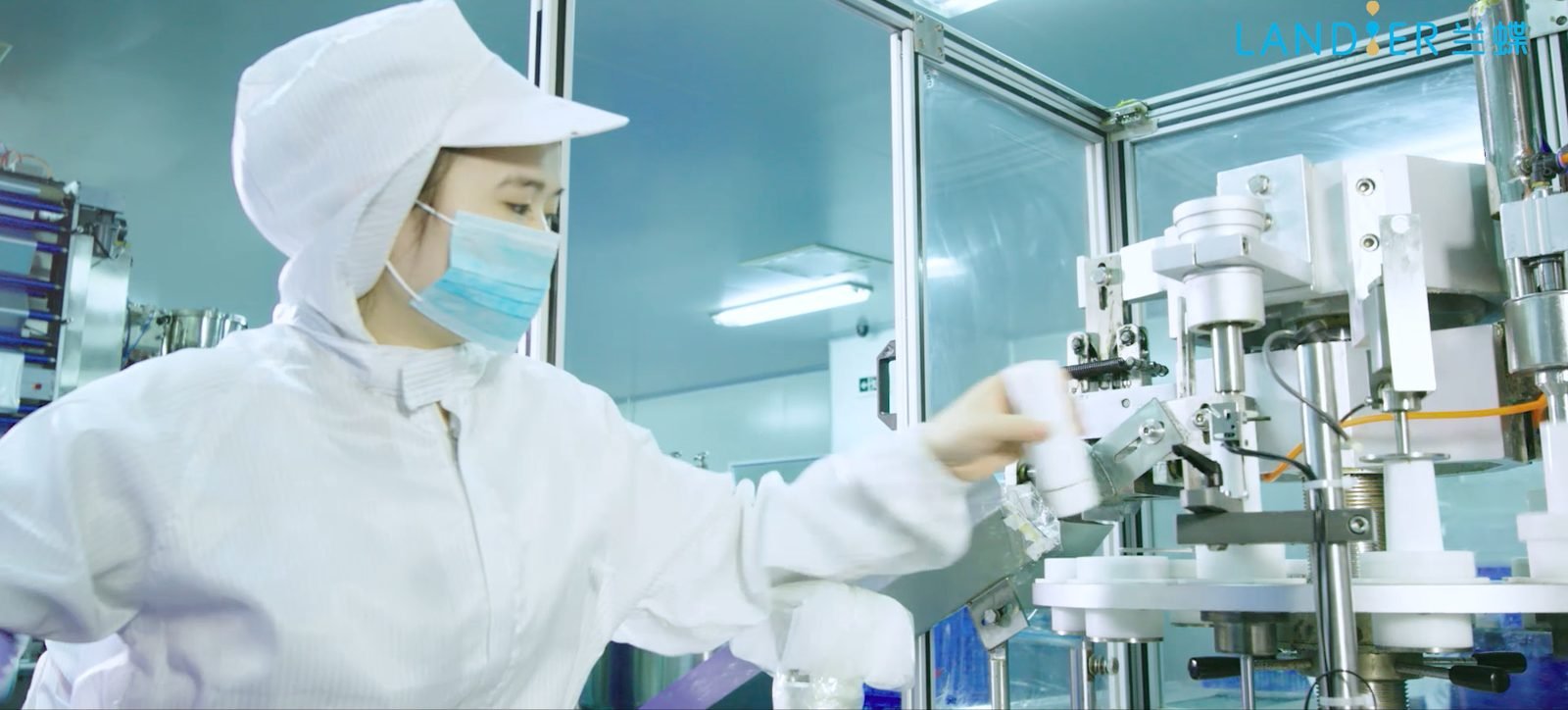
The factory’s job is execution: sourcing raw materials to spec, running bulk production, filling and assembly, quality control, and export documentation. You drive the design decisions, and you carry the responsibility for getting the design right. One nuance matters in real contracts: how much control you keep over the formula itself, and whether the factory may reuse it, is defined by your supply agreement — not by the word OEM on a website.
OEM suits brands that already know exactly what they want: an established company extending a line, a brand replicating a proven seller, or a company with its own R&D or a formula developed elsewhere.
What Is Cosmetics ODM Manufacturing?
ODM (Original Design Manufacturer) means the factory designs and develops the product, and you brand it.
A capable ODM partner contributes:
- A library of mature, tested formulas you can select and customize
- In-house chemists who adjust texture, actives, fragrance, or shade for your market
- Packaging engineering — which components work with which formulas
- Stability testing, compatibility testing, and regulatory documentation support
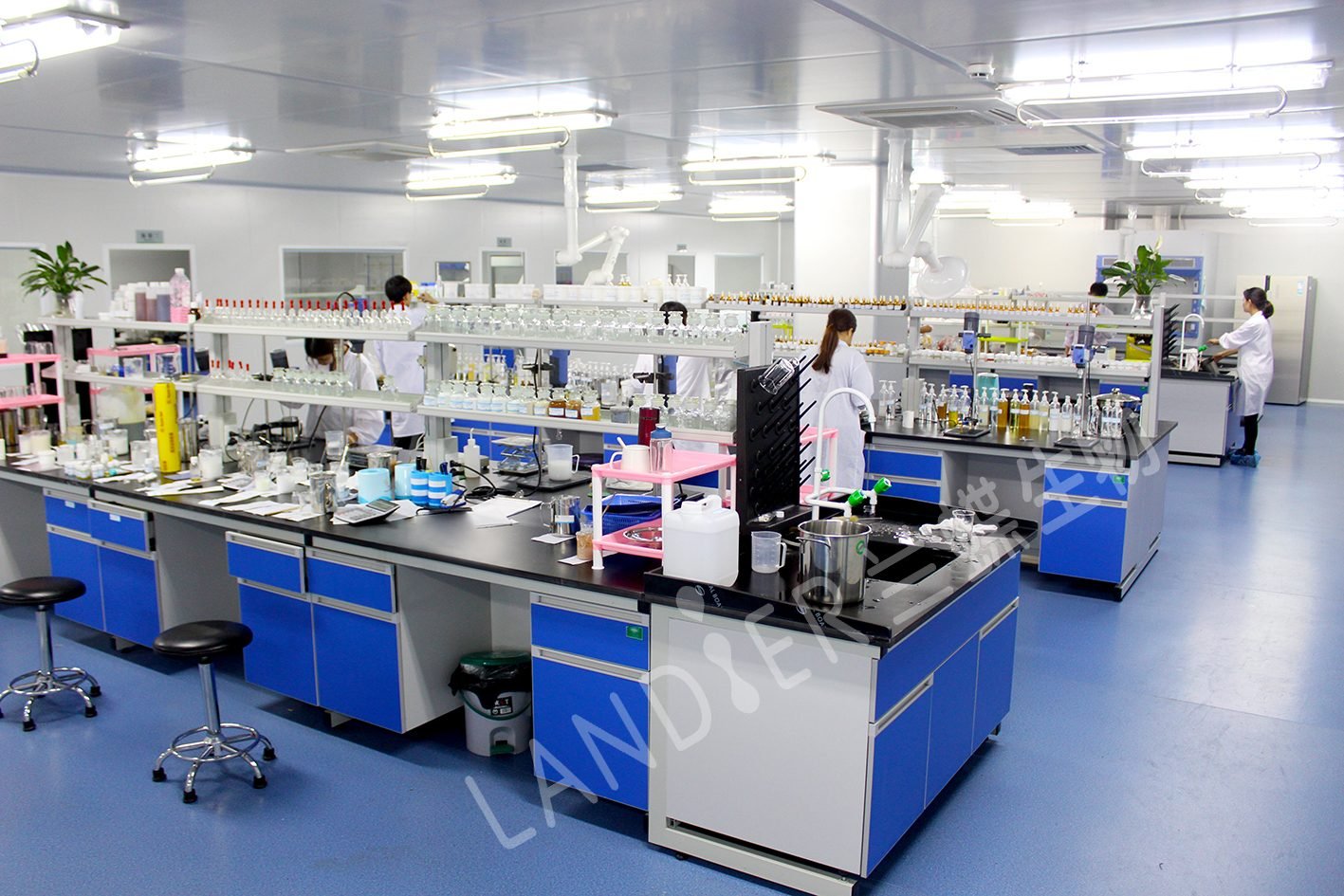
This is where the factory’s R&D depth really shows. At our own facility in Guangzhou, our 50+ person R&D team maintains a library of more than 5,000 mature formulas across skincare, color cosmetics, and personal care. When a client comes to us with a reference product and a price target, the project usually starts from one of those proven bases rather than from a blank page — which is precisely why ODM launches move faster and cost less upfront. If you want to see how that selection process works end to end, our guide to private label skincare manufacturing walks through it step by step.
ODM suits founders without a formulation background, brands entering a new category, and companies that want unique product development without hiring their own lab.
OEM vs ODM Cosmetics: A Side-by-Side Comparison
Definitions only go so far. The table below compares the two models on the dimensions that actually move a launch — with our own standard figures where numbers help, so you know what to ask any supplier for.
| Dimension | OEM | ODM |
|---|---|---|
| Formula design | You supply the formula and specification | Factory lab develops or adapts from proven bases |
| Upfront R&D cost | Higher — you fund development or supply a proven formula | Lower — built into existing bases |
| Sampling timeline* | 4–7 days once your spec is fixed | 4–7 days from a stock base; 10–14 days for full custom |
| Typical MOQ* | Custom formulation typically from 10,000 pcs/product | Stock skincare from 3,000 pcs/product; color cosmetics 6,000 pcs |
| Production lead time* | 4–5 weeks standard | 4–5 weeks standard |
| Formula exclusivity | Defined in your supply agreement | Factory retains the base; exclusivity is a negotiable contract term |
| Best suited for | Brands with clear specs and design capability | Founders, category expansion, fast launches |
*Standard terms at our facility, quoted per project. Every factory’s numbers differ — which is exactly why the productive question to any supplier is: state these numbers for my project, in writing.
One point deserves emphasis: formula ownership. Ownership is not decided by the model label — it is decided by three separate questions: who supplies the initial formula and specification, who performs the development and testing, and what your contract says about the resulting intellectual property. In OEM the answer to the first is usually “you.” In ODM, many factories let multiple clients use the same base with variations — so if a “hero product” matters to your positioning, negotiate exclusivity in writing before sampling begins.
Is Private Label the Same as OEM or ODM?
Not quite, and the distinction is useful when comparing suppliers. Private label is the broader commercial arrangement: products manufactured by one company and sold under another company’s brand. The OEM vs ODM distinction describes who designs what goes inside the package. In practice, a supplier calling itself a “private label manufacturer” usually signals a formula library you brand — the ODM end of the spectrum — while “contract manufacturer” often signals execution to your own specification. Treat the labels as hints, then confirm the scope in the quotation.
Which Model Fits Your Brand’s Stage?
Pre-launch and early-stage brands
Choose ODM, and be honest about it. With no sales data and no formulation team, a mature ODM base with your own branding, fragrance, and claims is the fastest route to a launch you can actually afford. Ask the factory which formulas they sell most often in your market — popularity is a form of validation, not a lack of originality. If you are still mapping the whole journey, start with our guide to how to start your own makeup line.
Growing brands with proven products
Shift toward OEM for your hero SKUs. Once you know a product sells, investing in a custom formula, custom packaging, and exclusive rights protects it from copycats. Many brands run a mixed portfolio: ODM for trend-response items, OEM for the core line.
Established brands and category leaders
Full custom development fits here: the factory’s lab works from your brief, with stability testing, PET challenge testing, and market-specific compliance built in. What the work is called varies by supplier — some market it as ODM, others as contract R&D. The label matters less than the scope in the quotation: what is developed, what is tested, what the R&D fee covers, and who owns the resulting intellectual property.
The Hybrid Reality: Most Projects Sit Between OEM and ODM
In practice, the OEM vs ODM choice is not binary. The most common project we see starts as ODM and drifts toward OEM: the client selects a base formula, then the lab adjusts actives, texture, preservative system, and shade range until the product is effectively custom. At that point, ask the factory to state in writing what has been created for you and what remains their stock — this determines your exclusivity.
The reverse also happens. A brand arrives with a “custom” formula that fails stability testing, and the practical path forward is a hybrid: keep their hero claims and texture, rebuild on a proven base. A 100+ SKU color cosmetics program we ran for a partner entering an African market followed the same pattern: iterative shade matching and stability testing across shades, line by line, until each product was ready for its launch window. Flexibility in both directions is a better signal of a capable factory than a rigid label on the brochure — one more thing to check when you verify a cosmetics factory before ordering.
5 Questions to Ask Before You Commit
Use this checklist when comparing quotes:
- Is this quote for a stock formula or custom development? Get the answer in writing, with sampling fees and timelines for each.
- What is included in the R&D fee? Stability testing, PET challenge testing, and compatibility testing with your packaging are often quoted separately. Testing scope is a contract item, not an assumption.
- Who owns the final formula, and what exclusivity can be granted for your market?
- What is the MOQ breakdown by component — formula, packaging, filling? Our guides on how skincare MOQs work and why packaging sets your MOQ explain why these are usually two different numbers.
- What regulatory support is included, and what stays on your side? In the EU, the CPSR safety assessment is compiled from data your Responsible Person controls; in the US, MoCRA facility registration is the manufacturer’s legal duty, while labeling and claims are yours. A clear quote states exactly which documents the factory provides.
If a factory cannot answer these cleanly, the OEM/ODM label on their website will not save the project.
Not sure which model your project needs? Send us your product category, target market, and estimated quantity on WhatsApp — we will tell you honestly whether a stock base or custom development fits, even when that means recommending the cheaper route.
Frequently Asked Questions
Is OEM or ODM cheaper for cosmetics?
ODM is cheaper upfront, because you build on the factory’s existing formula and packaging instead of funding original development. OEM costs more at the start but can be more economical long term for high-volume hero products, where formula exclusivity and custom tooling pay for themselves.
Who owns the formula in an ODM cosmetics project?
Usually the factory owns the formula, and the brand gets usage rights — often non-exclusive unless agreed otherwise. Ownership and exclusivity are contract terms, so raise them before sampling, not after launch.
Can I switch from ODM to OEM later?
Yes, and it is a common path. Once a product proves itself, brands often commission a custom OEM version — but expect to redo stability and compatibility testing, since even a small formula change restarts the validation clock.
Do MOQs differ between OEM and ODM?
Yes. At our facility, stock-formula skincare starts at 3,000 pcs per product and color cosmetics at 6,000, while fully custom development typically starts around 10,000. Custom packaging components carry their own supplier minimums, which are often the single biggest MOQ driver in the whole project.
OEM or ODM: Match the Model to Your Stage
The OEM vs ODM cosmetics decision comes down to one question: who designs the product. OEM means you design and the factory executes. ODM means the factory designs from proven bases and you customize and brand. The right choice matches your stage, your budget, and how much product ownership your brand strategy requires — and it can legitimately change from one SKU to the next.
If you are weighing the two models for a skincare or color cosmetics line, tell us your stage and market: we will recommend the model honestly, even when that means pointing you to a stock formula instead of a custom project. Start the conversation on WhatsApp, or read our checklist on how to choose a cosmetics OEM manufacturer.
Written by Jiawei Liu, Marketing Manager (7 years in cosmetics contract manufacturing). Technically reviewed by Zhanghui Chen, R&D Director. Last reviewed: 2026-10-28.
Guangzhou Landier Biotechnology Co., Ltd (Landier) is a cosmetics OEM/ODM manufacturer based in Guangzhou, China, serving 500+ brands since 1997. Our ISO 22716:2007 cosmetics GMP certificate (no. CN24/00006254, valid through 2027-10-06) and third-party certification to the US FDA CFSAN Cosmetic GMP Guidelines (certificate no. CN24/00006255) are available on request, along with our MUI Halal certification for cosmetics production.